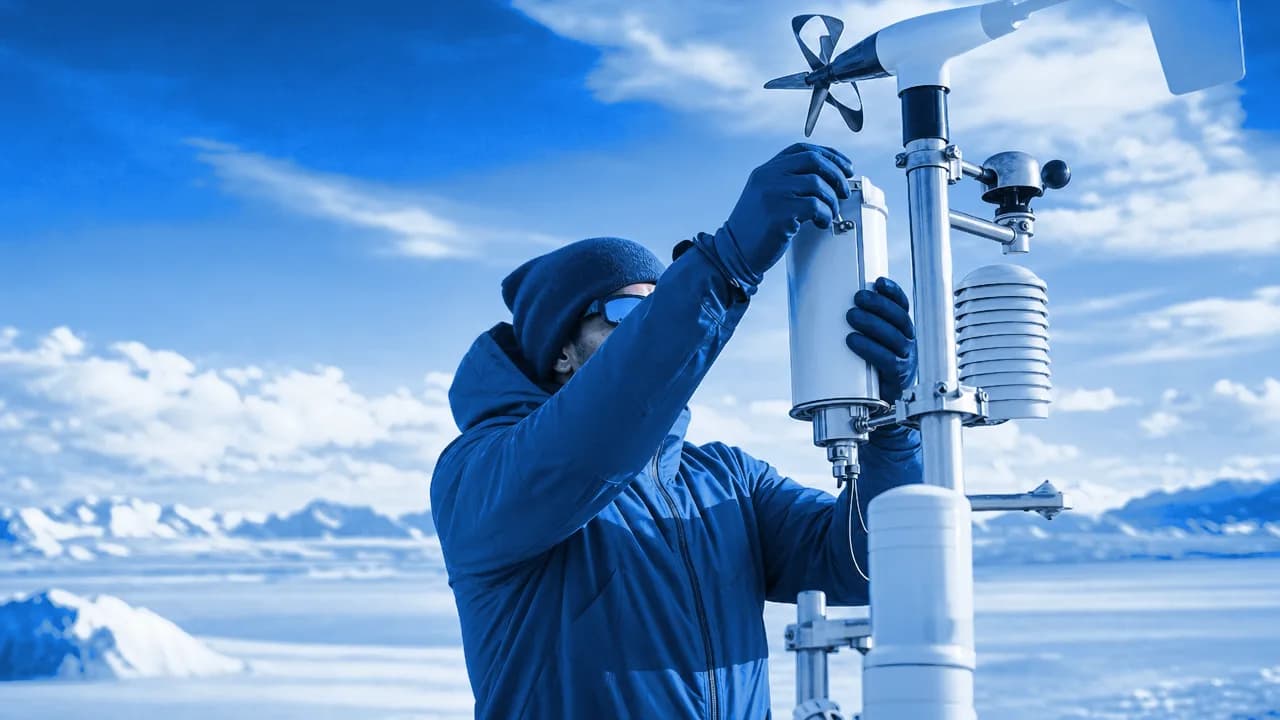
Test your knowledge of global circulation patterns and atmospheric feedback mechanisms.
Geography and Global Studies10 questions3 minIntermediate
Short version · Full version
Take the test
Test your knowledge of global circulation patterns and atmospheric feedback mechanisms.
Geography and Global StudiesFrom the unpredictable drizzle of a British summer to the frozen expanses of the cryosphere, the mechanisms governing our planet are both intricate and essential to understand. Whether you are curious about why the United Kingdom enjoys a milder annual temperature range than continental regions at the same latitude or how volcanic eruptions alter global temperatures, this climate quiz provides a rigorous framework for exploration.
The study of climatology is not merely about observing weather but about decoding the structural forces of our atmosphere. Within the World Climate test, you will encounter the atmospheric layers that house our weather systems and the specific boundary layer between the troposphere and the stratosphere.
This test is available in three levels: Easy, Intermediate, and Expert. Each level offers two formats to suit your schedule. You can opt for the short version, which consists of 10 questions to be completed in 3 minutes, or the full version, which provides a comprehensive 30 questions over 9 minutes.
A central pillar of this field is the ability to categorise regional patterns using climatological mapping. The World Climate test challenges you to distinguish between Mediterranean climates, characterised by their unique seasonal rainfall patterns, and the extreme temperature ranges of subarctic environments.
Beyond simple classification, the assessment delves into the drivers of deep ocean movements, such as the thermohaline circulation, and the regional feedbacks known as Arctic Amplification. By evaluating maritime influences and the role of high-altitude geography, such as the Tibetan Plateau, you can better understand why certain regions experience specific precipitation mechanisms, like those at the Intertropical Convergence Zone, while others remain under the influence of global pressure belts and subtropical highs.
The history of our planet is written in its response to external forces. This climate quiz covers the Milankovitch cycles, focusing on how changes in the stretch of the Earth’s orbit trigger long-term shifts.
Using the results from these tests helps you identify gaps in your geographical knowledge. Whether you are studying the calving events of the Petermann Glacier, the Coriolis effect, or the prevailing winds of the subtropical highs, the feedback provided will clarify the mechanisms within the global climate.
Every version of the World Climate test is provided with answers at the end of the session. You will receive a summary that indicates which questions were answered correctly and identifies the specific climate classifications or atmospheric mechanisms involved. This allows you to learn from your results and refine your understanding of global circulation and climate forcing.
The Easy level focuses on fundamental concepts like greenhouse gases and general weather patterns, while the Intermediate level introduces specific Köppen codes and oceanography. The Expert level requires a deep understanding of orbital parameters, climate sensitivity, and complex feedback mechanisms. You can choose the level that matches your current academic or professional background in geography.
If you want a quick check of your basic terminology and global awareness, the 10 questions in the short version are ideal for a brief review. For those preparing for examinations or seeking a thorough evaluation of their technical knowledge, the 30 questions in the full version offer a much broader scope and include detailed climatological mapping.